B2B Lead Generation System: From Positioning to Pipeline
Build a systematic B2B lead generation engine that delivers consistent, qualified pipeline without relying on paid advertising or large sales teams.
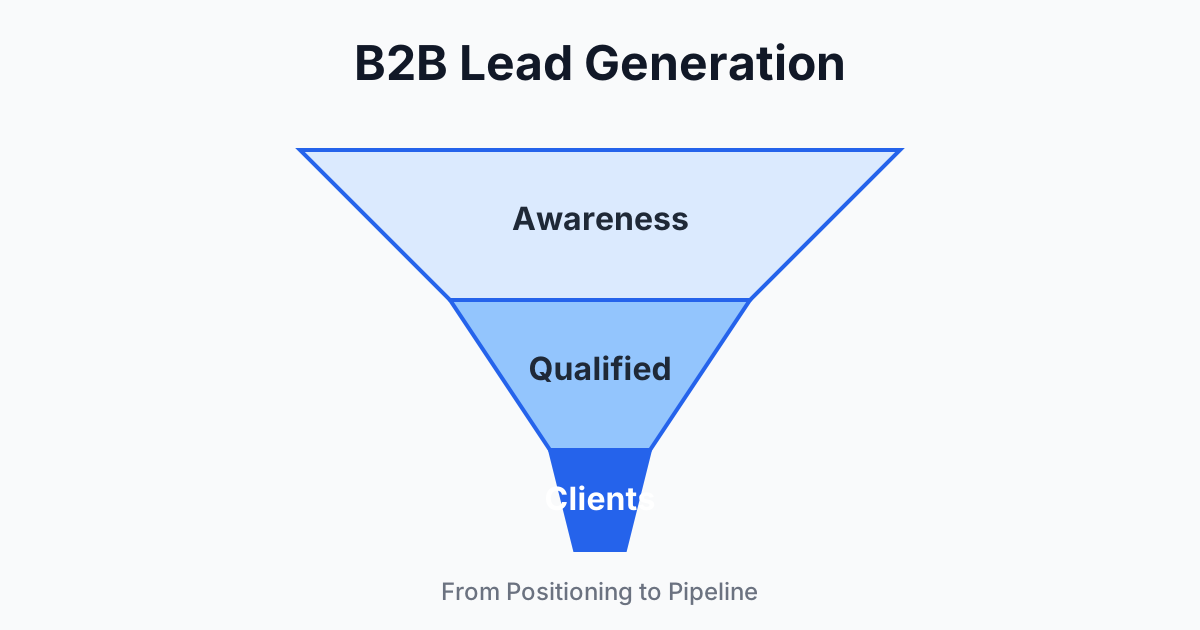
Most B2B businesses struggle with inconsistent pipeline. Leads arrive sporadically through referrals and occasional inbound interest, creating unpredictable revenue and making planning impossible. A systematic lead generation approach transforms this from random to reliable, providing the foundation for sustainable growth.
Why Most B2B Lead Generation Fails
B2B lead generation advice typically falls into two unhelpful extremes: expensive paid advertising that doesn't work for complex, high-consideration purchases, or aggressive cold outbound that damages your reputation and yields poor conversion rates.
Both approaches ignore a fundamental reality: B2B buying decisions involve multiple stakeholders, long consideration periods, and significant perceived risk. Effective lead generation must build trust and demonstrate expertise before asking for commitment.
The challenge is doing this systematically rather than relying purely on network effects and referrals. Referrals are valuable but insufficient. They don't scale predictably and often dry up when your network exhausts their immediate contacts.
A proper lead generation system generates consistent pipeline regardless of how many friends-of-friends remain untapped. It positions you as the obvious choice when prospects enter buying mode, even if you've never met them personally.
The Foundation: Positioning and Ideal Customer Profile
Lead generation starts with clarity about who you serve and what you solve. Vague positioning creates vague results. "We help B2B companies with marketing" attracts weak leads and makes every sales conversation an uphill battle.
Effective positioning is specific enough to be falsifiable. "We help B2B SaaS companies between £1M-£10M ARR build predictable outbound pipeline through Account-Based Marketing" immediately clarifies who you're for and who you're not for.
Document your Ideal Customer Profile (ICP) with precision: company size, revenue range, growth stage, existing infrastructure, common pain points, and buying triggers. The more specific your ICP, the more efficient your lead generation becomes.
This specificity feels risky. You'll worry about excluding potential customers. In practice, specificity attracts stronger leads whilst repelling poor-fit prospects who would waste your time or become problematic clients.
Once positioning is clear, every other component of lead generation becomes easier. Content creation, channel selection, messaging, and qualification all flow from this foundation. Skip this step and you'll struggle with everything downstream.
Building Your Lead Generation System
Channel Selection and Prioritisation
do not attempt to be everywhere. Focus on 2-3 channels where your ideal customers actually pay attention and where you can be genuinely useful, not just promotional.
For most B2B businesses, the highest-ROI channels are: LinkedIn (for decision-maker access), industry communities and forums (for trust-building), strategic partnerships and referrals (for warm introductions), podcast appearances and speaking (for authority-building), and targeted content marketing (for long-term inbound).
Choose channels based on your strengths and your audience's preferences. If you're a strong writer, LinkedIn articles and industry publications work well. If you're better at speaking, pursue podcast appearances and webinar partnerships.
Avoid channels that require sustained high-volume activity unless you have dedicated resources. Twitter can work but requires daily presence. Paid search works for high-intent queries but requires ongoing budget and optimisation. Focus on channels that compound-where content and connections built today continue generating value months or years later.
Content Engine for Lead Capture
Content marketing for B2B lead generation is not about viral posts or thought leadership for its own sake. it is about systematically demonstrating expertise to people who will eventually buy from you.
Create content that maps to different stages of buyer awareness. Some prospects know exactly what they need and are comparing solutions. Others recognise a problem but haven't identified potential solutions. Still others experience symptoms but haven't yet diagnosed the underlying problem.
Effective content includes: frameworks and methodologies that demonstrate your thinking, case studies that show real results achieved (without guaranteed claims), diagnostic tools that help prospects assess their situation, comparison guides that educate on solution categories, and common mistake compilations that build credibility.
The goal is not maximum reach but maximum relevance to qualified prospects. One piece of content that reaches 500 ideal customers and prompts 10 serious conversations is infinitely more valuable than viral content that reaches 50,000 people outside your ICP.
Repurpose aggressively. A single client success story becomes a case study, a LinkedIn post series, speaking points for podcasts, and sections of longer-form content. This isn't about being lazy-it's about reinforcing key messages through multiple touchpoints.
Outreach That Does Not Feel Like Spam
Outbound outreach works when it's personalised, relevant, and respectful of the recipient time. Generic cold email blasts don't work for complex B2B sales.
Effective outreach identifies prospects who match your ICP, researches their specific context, and leads with value or relevance rather than a pitch. The goal of first contact is not to close a deal but to start a conversation with someone who genuinely might benefit from your expertise.
Examples of high-value outreach: referencing specific content they've published and offering a relevant framework, sharing a genuine insight about their business based on public information, inviting them to participate in research or a peer group, or introducing them to someone in your network who could help them.
Follow up thoughtfully. Many buyers aren't ready when you first reach out but will be in 3, 6, or 12 months. A systematic nurture sequence keeps you visible without being pushy.
Track outreach carefully. Measure response rates, conversation rates, and eventual conversion rates by message type, channel, and audience segment. Double down on what works; eliminate what doesn't. For more on improving these conversations once generated, see our guide on conversion rate optimisation.
Partnership and Referral Systems
Strategic partnerships can generate more qualified leads than any other channel, but most businesses approach partnerships too casually.
Identify businesses that serve the same ICP but offer complementary (non-competing) services. If you do marketing strategy, partner with implementation agencies, designers, or developers. If you do operations consulting, partner with financial advisors or HR consultancies.
Structure partnerships with clear mutual benefit. do not just ask for referrals-create reasons for partners to refer you. This might include co-marketing, revenue sharing, reciprocal referrals, or joint service packages that benefit both businesses.
Formalise your referral process for existing clients and partners. Make it easy for people to refer you by providing clear language about who you help and how, creating introduction templates they can use, and offering multiple referral paths (warm introduction, direct contact, event attendance).
Show appreciation for referrals with more than just thank-you notes. Keep referrers updated on outcomes (where appropriate), reciprocate where possible, and consider formal referral incentives if they fit your business model and professional standards.
Lead Qualification and Scoring
Not all leads deserve equal attention. A systematic qualification process ensures you invest time in prospects most likely to become valuable clients.
Implement a simple lead scoring system based on fit (how well they match your ICP), intent (how actively they're seeking a solution), and timing (how soon they're looking to buy).
Develop a qualification framework based on criteria like budget authority, need urgency, and current situation. This doesn't need to be complex-even a simple "high/medium/low" score on three dimensions helps prioritise effectively.
Disqualify ruthlessly. Politely declining or postponing conversations with poor-fit prospects frees time for high-potential opportunities. This feels counterintuitive when pipeline is thin, but chasing poor-fit leads wastes time and rarely converts into good business.
Create clear handoff processes if you work with a team. If you have contractors, assistants, or junior staff doing initial outreach or qualification, document exactly when and how leads should escalate to you for direct engagement.
For businesses ready to scale beyond founder-led sales, strong qualification becomes even more critical. See our revenue growth strategy guide for more on building scalable sales systems.
Measuring and Optimising Your System
Track the metrics that actually matter for B2B lead generation: number of qualified conversations started per week, conversion rate from conversation to opportunity, time from first contact to qualified opportunity, and channel effectiveness (qualified leads per channel).
Avoid vanity metrics like total reach, impressions, or unqualified leads generated. These numbers feel good but don't predict revenue.
Review metrics weekly, optimise monthly. Weekly reviews keep you accountable to activity levels and let you catch problems quickly. Monthly reviews allow enough time for meaningful patterns to emerge.
Experiment systematically. Test one variable at a time: different messaging, different content types, different channels, different audience segments. Give each experiment enough time to generate meaningful data before concluding it works or doesn't.
Build feedback loops from closed deals back to lead generation. Which channels and content types generated your best customers? What common characteristics did they share? Use this information to refine your ICP and focus your efforts on the highest-value prospects.
Common Lead Generation Mistakes
- ✗Attempting to use every channel simultaneously instead of mastering 2-3 channels first
- ✗Creating content that showcases expertise but doesn't connect to buying decisions
- ✗Treating all leads equally instead of prioritising based on fit and intent
- ✗Giving up on channels or tactics before giving them adequate time to work
- ✗Focusing on volume metrics (impressions, followers) instead of qualified pipeline
- ✗Sending generic outreach messages that feel like spam
- ✗Neglecting follow-up and nurture in favour of always chasing new leads
- ✗Failing to track source data, making it impossible to identify what actually works
- ✗Copying tactics from B2C or high-volume B2B without adapting to complex sales
Example Scenario: Building a Lead Generation System
Consider a financial planning firm targeting medical practices with £500K-£3M revenue. Previously, they relied entirely on referrals from existing clients and occasional networking events. Pipeline was inconsistent, making it hard to plan hiring or capacity.
**Month 1**: They clarified positioning around "financial planning for high-earning medical professionals building wealth whilst managing practice ownership responsibilities". They documented their ICP: practice owners aged 35-55, typically 5-10 years into practice ownership, earning £200K-£500K personally, concerned about tax efficiency and retirement planning.
**Month 2-3**: They launched a LinkedIn content series sharing frameworks around "tax-efficient wealth building for medical practice owners", posted twice per week with specific examples and common scenarios. They joined two online communities for medical practice owners and began contributing helpful responses (without pitching services).
**Month 4-6**: They developed a simple "practice owner financial health assessment" tool-a 10-question self-assessment with automated scoring and personalised recommendations. This became their primary lead magnet. They also started a referral program, asking existing clients to introduce them to one colleague per quarter.
**Month 7-9**: They began systematic outreach to practice owners who engaged with their content, leading with specific insights from their LinkedIn posts rather than generic pitches. They secured three podcast appearances on medical practice management podcasts, each generating 8-12 qualified inquiries.
**Results after 9 months**: They built consistent pipeline averaging 15-20 qualified conversations per month, up from 2-3 previously. Conversion rates remained similar (around 25%), but more consistent pipeline meant more predictable revenue. They were able to confidently hire another advisor based on forward pipeline visibility.
Frequently Asked Questions
How long does it take to see results from a lead generation system?
Timeline varies significantly by channel and starting point. Outreach and partnerships can generate conversations within weeks. Content marketing and SEO typically require 3-6 months before generating consistent results. Most businesses see meaningful improvement in pipeline within 90 days of systematic implementation, but this is not guaranteed and depends heavily on execution quality and market conditions.
How many leads do I need to generate to hit my revenue goals?
Work backwards from your revenue target. If you need £500K in new revenue, your average deal is £50K, and you close 25% of qualified opportunities, you need 40 qualified opportunities, which might require 120+ initial conversations depending on your qualification rate. Track your specific conversion rates to build your own model.
Should I focus on inbound or outbound lead generation?
Most successful B2B businesses use both. Inbound (content, SEO, referrals) builds long-term compound value but takes time to scale. Outbound (partnerships, targeted outreach) generates faster results but requires ongoing effort. Start with whichever matches your strengths, then add the other over time.
Do I need marketing automation software?
Not initially. Spreadsheets and simple email tools work fine until you are generating 50+ leads per month. Premature investment in marketing automation often creates complexity without benefit. Focus on generating consistent pipeline first, then add automation to scale what is already working.
How do I generate leads if I am in a very technical or niche industry?
Niche industries often have tighter communities, which can be an advantage. Focus on industry-specific channels (trade publications, specialised forums, industry associations) rather than broad platforms. Depth of expertise matters more than breadth of reach in technical niches. Case studies and technical content demonstrating domain mastery work particularly well.
Build Your Lead Generation System
A systematic approach to lead generation transforms unpredictable pipeline into consistent, qualified opportunities. Implementation requires adapting these principles to your specific market, strengths, and customer buying process.
Get your custom pipeline plan: Our assessment tool helps identify your highest-leverage lead generation channels and creates a 90-day implementation roadmap. Start your free assessment now.
Explore how lead generation fits into your broader revenue strategy in our comprehensive revenue growth guide, or learn how to improve conversion once leads enter your pipeline with our CRO guide.
Related Guides
Revenue Growth Strategy for Founder-Led B2B: A Practical 12-Month Plan
Learn how to build a sustainable revenue growth strategy for your B2B business with this practical 12-month framework covering positioning, pipeline development, and margin protection.
Read guide →Conversion Rate Optimisation (CRO) for Service Businesses
Improve your conversion rates from enquiry to client with systematic optimisation of your sales process, proposals, and buying experience for B2B service businesses.
Read guide →Pricing & Packaging: Increase Revenue Without Increasing Workload
Strategic pricing and service packaging approaches that improve profitability, simplify buying decisions, and reduce custom proposal overhead for B2B service businesses.
Read guide →